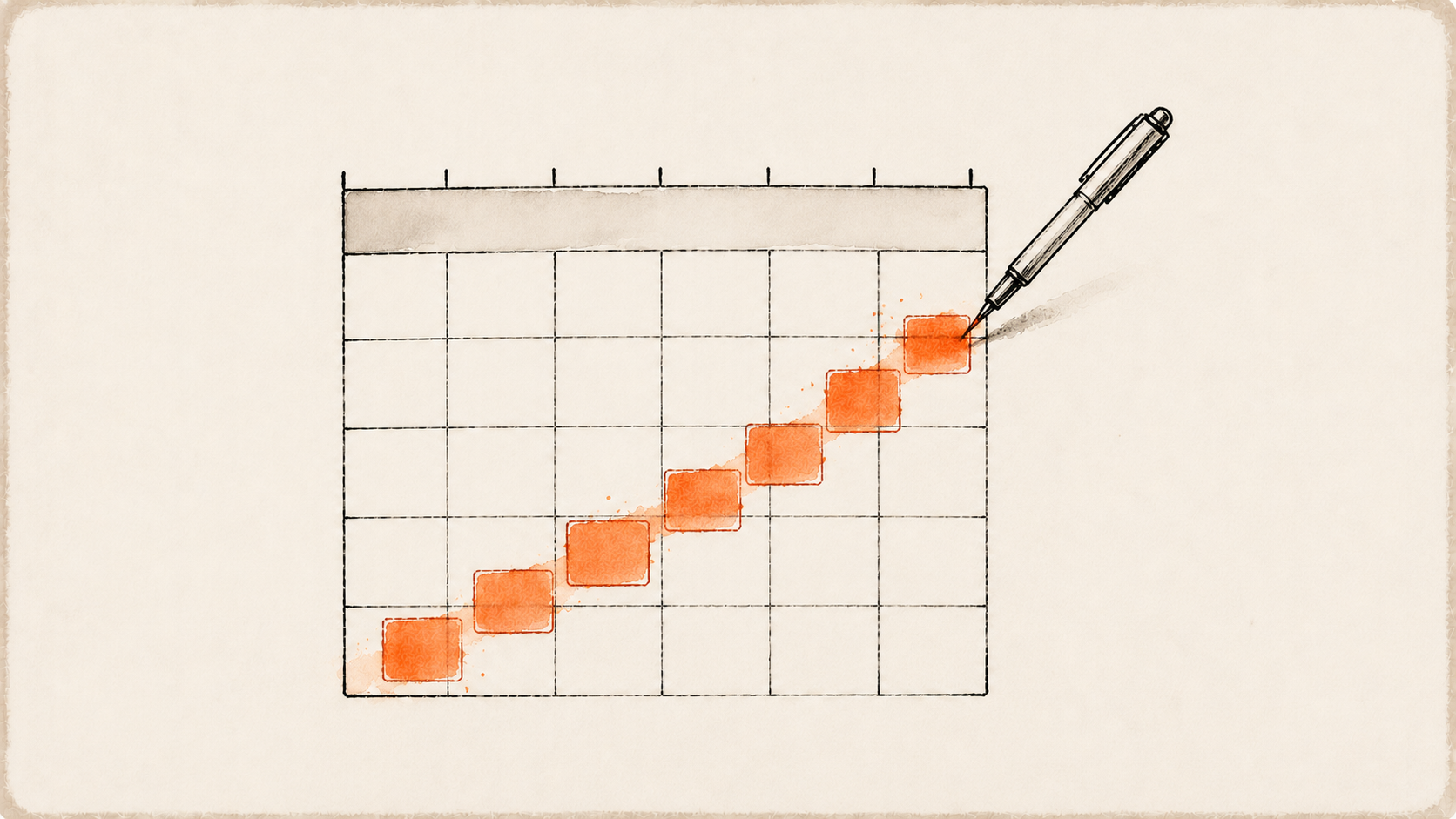
If you're a creator, founder, or operator, the math used to be brutal: post 3–5 reels a week, or fall off. Each reel takes 2–4 hours end-to-end — write, film, edit, caption, schedule. That's 10–20 hours of content work a week before you've done your actual job.
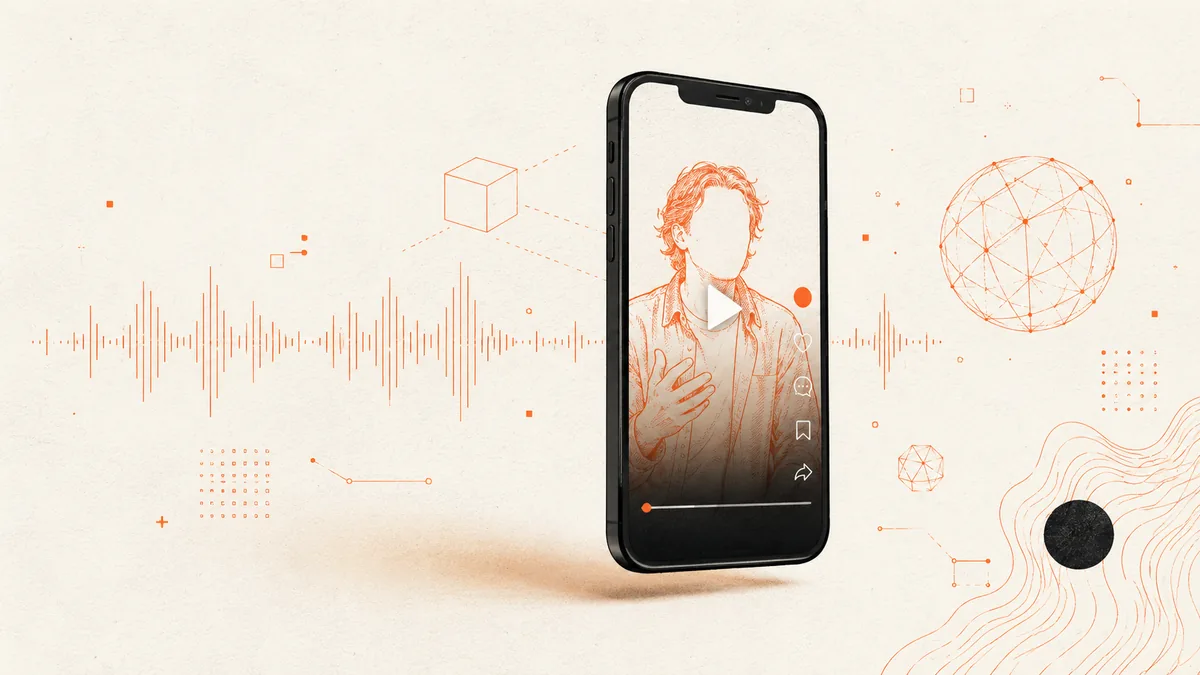
That math broke this year. Not because of any single tool — because the full stack finally clicked into place. Voice cloning, avatar generation, automated research, and cross-platform publishing now compose into one workflow that ships reels in your face and voice while you do other things.
This guide is the playbook for using that stack. What's actually possible today. Where the trade-offs are. The order to set things up. And how to avoid the AI-content tax that kills reach.
#What "AI reels" means in 2026
The term covers three different things. Don't confuse them.
Generic AI reels — stock avatars, generic voiceovers, AI-written scripts. Reach drops fast. Platforms detect the patterns. Audiences disengage. Skip.
Templated AI reels — your photos, your text, but auto-arranged. Slightly better. Still feels canned. Mid.
Personal AI reels — your face, cloned from one photo. Your voice, cloned from 15 seconds. Your scripts, written from research on creators you actually compete with. This is the category that works. Indistinguishable from a reel you'd film manually, with one critical difference: you didn't film it.
The rest of this guide is about that third category.
#Voice cloning — what actually works
The accuracy bar to clear is 95%. Below that, your audience hears the difference. Above it, they don't.
What you need to provide:
- 15 seconds of clean audio — read into your phone, no background music. That's it.
- One re-recording for emotional range — 30 seconds of you laughing, excited, deadpan. Helps the model match tone across different reel moods.
What modern voice engines deliver from that:
- Accuracy — your voice in seconds, indistinguishable in blind tests.
- Tone matching — read a sad line, sounds sad. Read a hyped line, sounds hyped.
- Multilingual — same voice, different languages. Useful if your audience straddles regions.
- Latency — under 8 seconds per minute of audio. Fast enough that one script generates an entire reel's voiceover before the kettle boils.
The thing nobody talks about: don't use a generic voice library. Even if your audience doesn't know it's you, the platform's spam-detection model picks up on reused voice signatures across thousands of accounts. Your own voice, cloned, is unique by definition. Reach holds.
#Avatar — face from one photo
In 2024 you needed a 5-minute video shot in good lighting from three angles. In 2026 you need one photo.
What the photo needs to be:
- Front-facing, eyes open
- Decent light (window light is enough — no studio needed)
- One person, no occlusion (no hands on face, no sunglasses)
That's it. From there, the avatar can:
- Lip-sync to any voice (yours, ideally)
- Hold a 60-second monologue without the uncanny mouth-drift that broke 2023-era avatars
- Match natural micro-expressions when the voice changes tone
- Render in 4K, ready for vertical reels
The trade-off: still photos generate avatars that work for talking-head reels (the dominant format on TikTok / Reels / Shorts). They don't yet do walking, hand gestures during the camera move, or anything with environment interaction. If your style is "talk to camera," you're 100% covered. If your style is "vlog from inside a moving car," you're 30% covered.
For the 90% of creators whose top-performing reels are talking head with B-roll cuts, one photo is enough.
#The reel formula — what to put in the script
A voice clone and an avatar produce mid content if the script is mid. The script is still the highest-leverage thing.
Patterns that work across thousands of viral reels:
- Hook in the first 1.8 seconds. Not "Hey guys today I'm going to talk about..." — that's a 3-second bounce. Start with the conclusion. Or a contradiction. Or a specific number.
- Face on camera by 3 seconds. No long intro slides. The viewer needs to see who's talking immediately, or the algorithm reads a high skip-rate and chokes distribution.
- One idea per reel. Not three. Not five. Pick one, deliver it in 30 seconds, leave the viewer wanting more.
- End with a question. Comments are the strongest engagement signal. Open the loop.
- Caption ending CTA, not caption opening. Algorithm reads the first 30 chars as preview. Lead with the hook, save the "follow for more" for the end.
You don't have to invent these from scratch each week. Regent watches three creators you nominate as competitors, every day, and extracts the script patterns from their best posts. Then it writes your week's calendar using those patterns — in your tone, on your topics, with your voice cloned over the result.
#Cross-platform scheduling — the silent killer
A reel takes the same effort to ship to one platform as five. Yet most tools push to one (Instagram, usually) and let you screenshot for the rest.
What native publishing means in 2026:
- Instagram Reels + Feed — direct API publishing, no third-party watermark, eligible for monetization.
- TikTok — direct upload, vertical native, sound attribution intact.
- YouTube Shorts — native upload, ranks separately from your long-form content.
- X (Twitter) — vertical video native now, autoplay in feeds.
- LinkedIn — vertical video preferred for personal brands, especially for B2B.
The platforms don't share an algorithm. Posting at 8 PM Eastern hits Instagram's peak but misses TikTok's morning push and YouTube's after-work commute. Your scheduler should know the peak time per platform per audience, and stagger.
#What kills AI reels — avoid these
Even with a perfect voice clone and avatar, four things tank reach:
- Captions cut off mid-word. Auto-captions that don't sync to the voice signal "low-effort production."
- Music ducked too late. If the music is loud at second 1 and quiet at second 4, the algorithm reads "unprofessional."
- Vertical bars on top/bottom. Most platforms penalize anything that isn't true 9:16 fullscreen.
- Posting at midnight your time, peak time for nobody. Peak times exist. Use them.
A single integrated platform handles all four automatically. Stitched-together tools rarely do.
#The autopilot stack
Here's the workflow that ships a full week of reels in under 12 minutes:
- Drop 3 competitor handles. Regent Insight scrapes their last 30 days, extracts hook patterns, peak posting windows, and topic gaps.
- Auto-generate the week's calendar. Topics + 3 hook variants per slot, regeneratable with one click if a topic doesn't fit.
- Approve or regenerate. You read the topics, hit approve. Or hit regenerate for variants.
- Upload one photo, record 15 seconds of voice. Done once, used forever.
- Watch the agent ship. Scripts written, reels rendered in 4K with your face and voice, captions auto-synced, scheduled to each platform's peak time.
You don't open a video editor. You don't film. You don't write. You approve.
#What's still hard
To be honest: AI reels are not a silver bullet. Some things still take work.
- Your point of view. The agent renders your face, but it can't decide what you stand for. The 3 competitors you choose define the topic universe — pick poorly, and your reels miss.
- Engagement. AI ships the post. You still have to reply to comments and DMs (unless you turn on auto-DM funnels, which is a whole separate piece).
- Original ideas. The pattern-finding tells you what works for others. Your edge is what they're missing. That's still a human call.
But the production tax — the editing, the captioning, the cross-posting, the scheduling, the formatting — is solved. The 10–20 hours a week you were burning on production is now 12 minutes a week of approval.
That's the 2026 game.
Want to try the stack? Apply for the Creator Beta — we're letting in the first 100 creators this quarter. Drop your handles, your face, your voice, and ship your first reel in under 12 minutes.
Read next: