I read a lot of creator accounts for a living — building Regent means watching what actually grows versus what the advice industry claims grows — and no question comes up more than this one. The frustrating truth is that the honest answer is boring: probably fewer Reels than the gurus tell you, probably more than you're posting now, and held steady for far longer than feels reasonable. Here's what the data and Instagram's own statements actually support, and how to pick a number you can keep.
#How often should you post Reels on Instagram to grow?
For most creators: 3–5 Reels per week, sustained for months, beats any short burst of daily posting. Instagram head Adam Mosseri has said posting more generally helps reach but warns against burning out — and Instagram has never published a magic number, because there isn't one.
The biggest dataset I could find on this is SocialPilot's analysis of 4.4 million Instagram posts across 45,700 accounts, and its conclusion is refreshingly anti-guru: there is no magical frequency that works for every account. Its 2026 guidance lands at 3–5 feed posts per week as a baseline, with Reels at the higher end for accounts prioritizing growth. Mosseri's own framing, quoted in that same guide: "Posting often generally helps with reach, but it's important not to burn out." That second clause is the part everyone ignores, and it's the part this post is really about.
#Does posting more actually grow your account faster?
Up to a point, yes — every Reel is another chance to be discovered, shared, and surface on the Reels tab. But the relationship isn't linear. Each post still has to clear a quality floor, because the signals Mosseri has pointed to — watch time, sends, likes relative to reach — are per-post ratios, not volume counts.
Think about what those signals mean: a Reel that holds attention and gets sent to friends earns distribution regardless of whether you posted once or seven times that week. A Reel that loses viewers in two seconds earns nothing, no matter how heroic your posting schedule was. I haven't seen credible evidence that posting more hurts your other posts' distribution — the real cost of over-posting is your time and your quality floor. When creators double their output, the extra Reels usually come from the idea pile they'd previously rejected. Volume built on your B-tier ideas is not a growth strategy; it's a treadmill.
#What's a realistic Reels cadence for your situation?
Match cadence to production reality, not aspiration. Solo creator with a day job: 2–3 Reels per week. Full-time solo creator: 3–5. Creator with an editor or AI tooling: 5–7. Team-run or agency account: daily is feasible. The right number is whatever you can hold for six months without quality slipping.
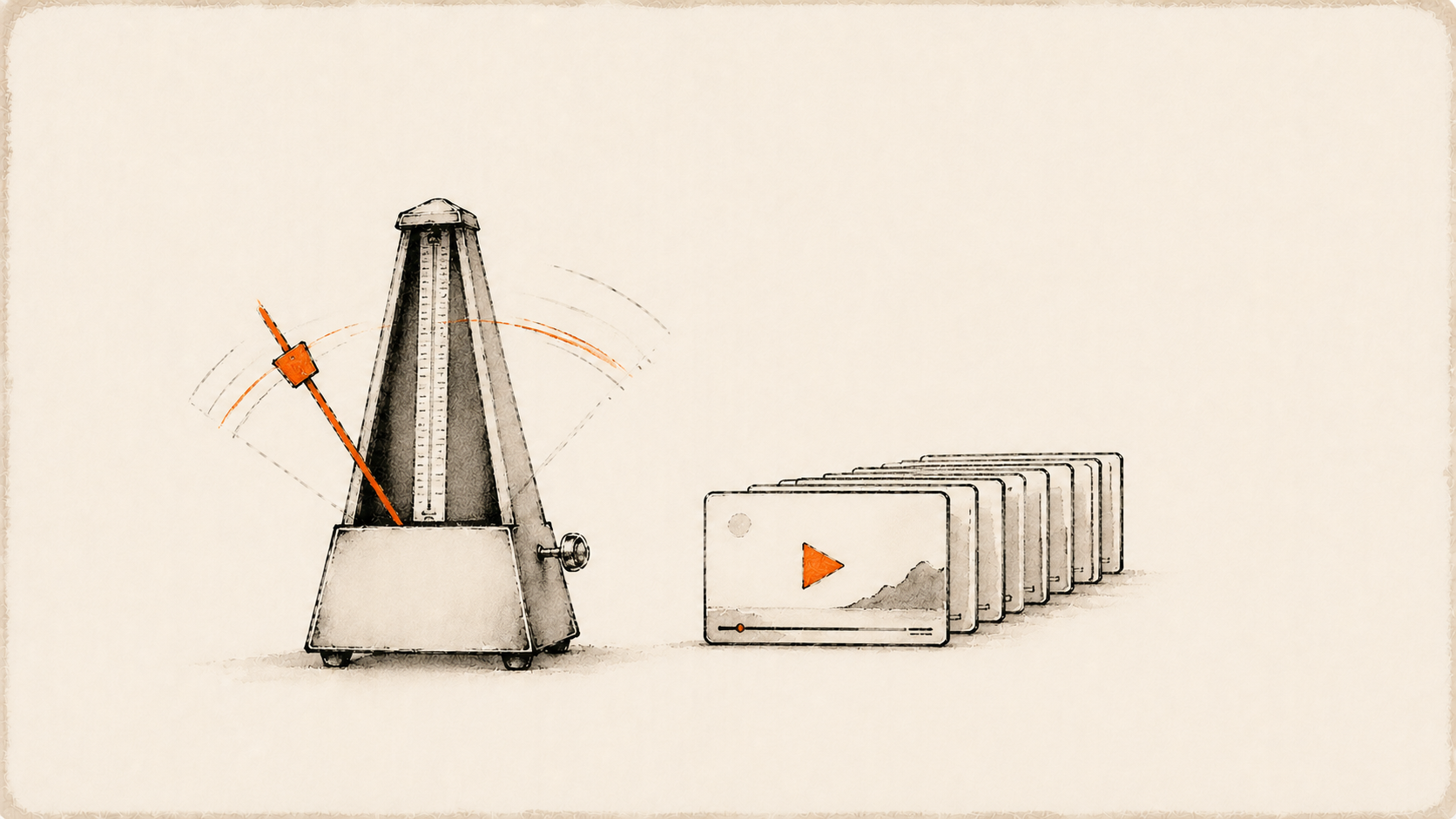
The six-month test is the whole framework. A cadence you can only sustain for three weeks isn't a cadence, it's a sprint — and audiences (and recommendation systems) respond to rhythm, not bursts. Work backwards from your actual capacity: how many hours a week can you genuinely give to ideation, scripting, filming, and editing? Divide by the real time one good Reel takes you — for most people that's 1–3 hours, not the 20 minutes gurus claim — and you have your number. If the number disappoints you, the fix is changing your production system, not pretending you have more hours.
#Why does posting three times a day burn creators out?
Because the math doesn't work for one person. Three daily Reels means ideating, scripting, filming, editing, captioning, and publishing 21 times a week — a full-time content operation. Most solo creators who attempt it ship visibly declining quality within weeks, then stop entirely, which is worse than a steady three per week.
I've written a longer teardown of this advice in Stop Posting 3x a Day, but the short version: the accounts that genuinely post multiple times daily almost always have teams, clip libraries, or formats cheap enough to mass-produce. Solo creators copying the surface behavior without the underlying machine get the burnout without the growth. And the failure mode is predictable — a three-week sprint, a quality collapse, a quiet month of nothing, and then the restart from zero. Sprint-and-silence is the single most common pattern I see in stalled accounts. A boring, sustainable cadence beats it every time.
#What does the data actually say about frequency?
The honest answer: large studies find no universal optimum. SocialPilot's 4.4-million-post analysis concluded there's no magical number; Mosseri has confirmed engagement-quality signals, not raw post count, drive ranking. Benchmarks showing big accounts posting more are descriptive, not causal — teams enable volume, not the reverse.
That last point deserves a beat, because it's the statistical trap most frequency advice falls into. Yes, larger accounts post more often on average. But they post more because growth bought them editors, clip libraries, and workflows — the volume is a consequence of success at least as much as a cause of it. Copying a 500k-follower account's posting schedule without its production system is cargo-culting. The transferable lesson from the data is narrower and more useful: show up consistently, make each Reel earn its watch time, and let frequency rise only as your system genuinely supports it.
#How do you sustain a cadence without burning out?
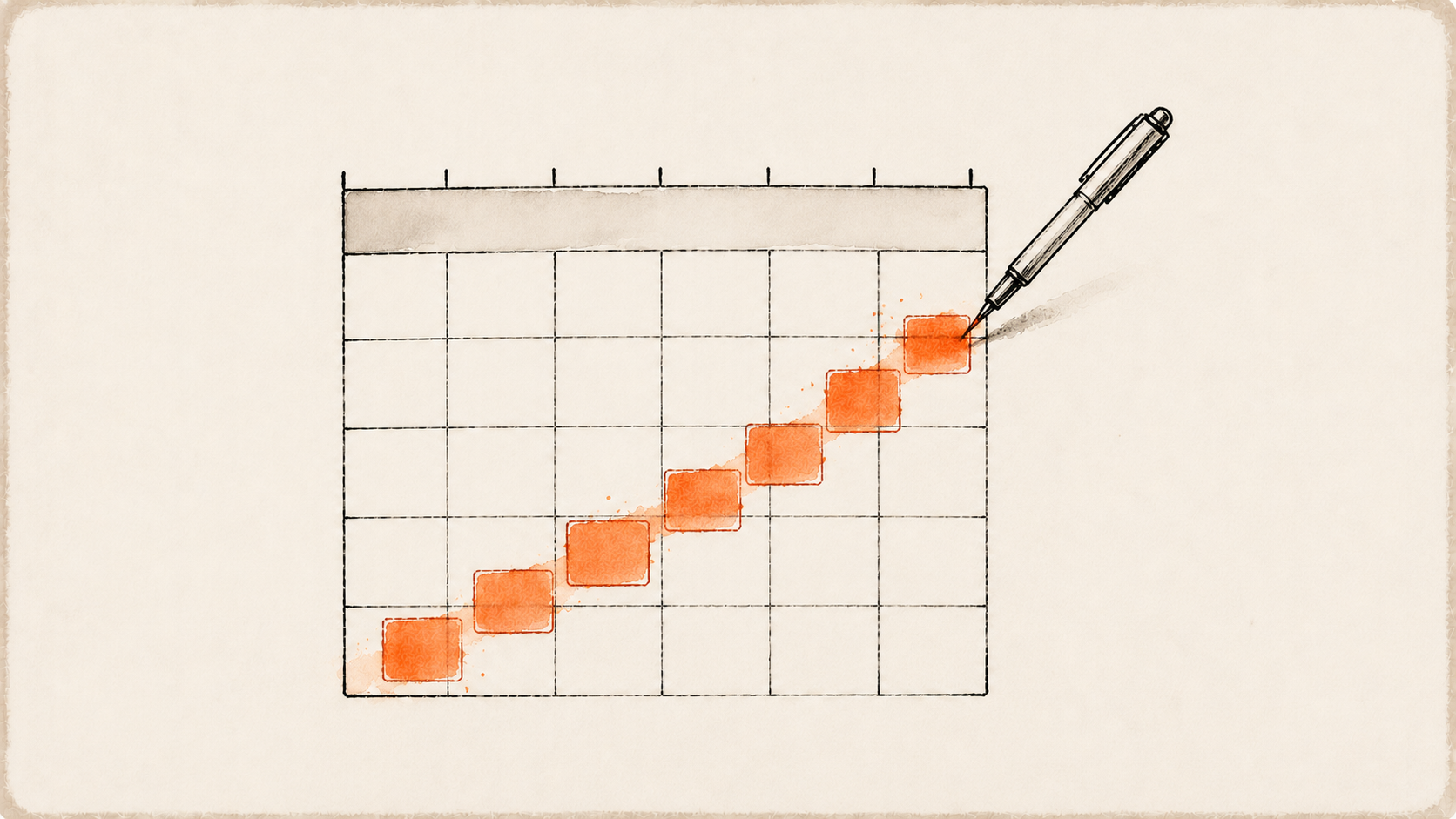
Systems, not willpower: batch your filming, separate idea collection from creation, keep a content calendar so you never start from a blank page, and automate the steps that don't need your judgment. Creators who last treat publishing as a pipeline, not a daily act of inspiration.
Concretely: one filming block can produce a week of Reels if the scripts are ready before you press record — batching kills the per-post startup cost that makes daily creation exhausting. Keep a running idea bank fed by accounts in your niche that are already working, so ideation never blocks production. And plan a week ahead, always; deciding what to post on the day you post it is how cadences die. This loop is exactly what I automated in Regent: it watches competitor accounts for proven ideas, builds your weekly content calendar, drafts the scripts, can render avatar Reels for the days you can't film, and publishes at peak time. If you just want to pressure-test a cadence before committing to anything, the free reel planner maps your available hours to a realistic weekly schedule — no signup needed.
Whatever number you land on, pick the one you can still be posting in six months. And if you want the system that makes 3–5 a week feel like 1, Regent's public beta is free, Instagram only, capped at 100 creators — apply at heyregent.com.